When a company refuses to send a payoff letter, it can feel like your settlement is being held hostage. Every day they delay is another day of interest adding up on an agreement you are trying to leave.
You may be trying to switch lawsuit funding companies because your current payoff keeps getting higher. Or you may need more money now and want to roll the old balance into one new agreement with better terms moving forward.
Either way, the new company cannot complete the switch until the current company provides a written payoff letter. That delay can keep you trapped in an expensive agreement while the balance continues to grow.
At Baker Street Funding, we regularly hear from injured plaintiffs who want to switch lawsuit funding companies because their current costs are too high, they were denied additional funding, or they want to roll the old balance into one new agreement with better terms moving forward.
What a lawsuit funding payoff letter is
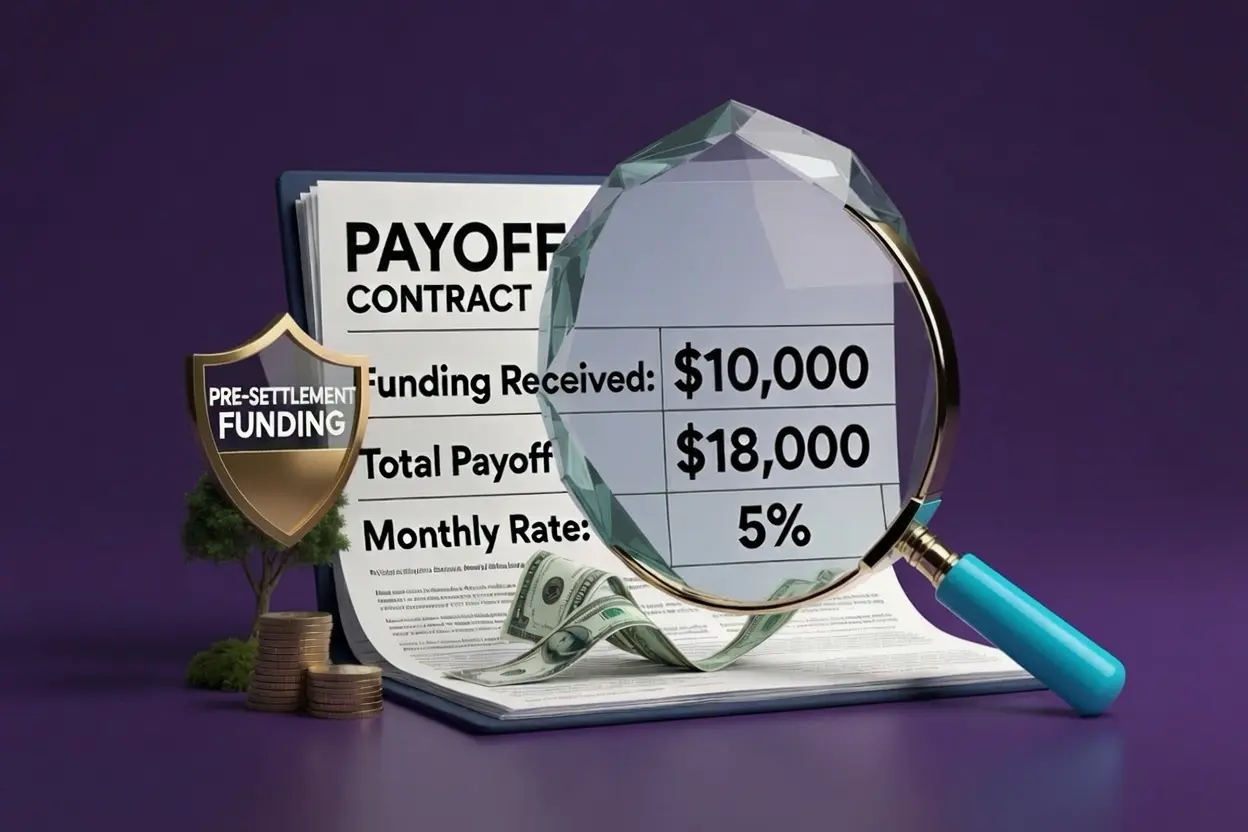
A payoff letter is the written amount needed to satisfy your current funding agreement as of a specific date.
A proper payoff letter should show:
- the amount you originally received
- the fees or charges that have accrued
- the total payoff amount
- the date the payoff is good through
- how the amount changes after that date
- where the payoff must be sent
- how the old lien or claim will be released after payment
Without that document, your attorney and any new funding company cannot fully verify the balance or complete the buyout. That process usually requires current payoff information and attorney coordination.
Why plaintiffs change lawsuit funding companies
Most plaintiffs switch because the current funding situation is no longer working.
Common reasons include:
- the current funding costs are too high
- the payoff keeps growing too fast
- the plaintiff needs additional funds
- the current company denied additional funding
- the plaintiff wants to consolidate the old balance into one new agreement with better terms
- the plaintiff wants to protect more of the eventual settlement from excessive charges
If you are struggling with rent, groceries, medical bills, transportation, or other basic expenses while your case is still pending, this is not just a paperwork issue. It is a cost issue. It is a timing issue. And it can directly affect how much of your settlement you keep.
Why a lawsuit loan payoff letter delay or refusal can seriously hurt a plaintiff
A payoff letter delay can do more than slow the process down.
It can keep you stuck in a higher-cost funding agreement while charges continue to accrue. It can block a new company from paying off the old balance and moving forward with additional pre-settlement funding. And if your current company already denied more funding, the refusal to provide the payoff can leave you boxed in from both sides.
For plaintiffs trying to lower costs, every delay can make the balance harder to manage when your case settles. That is why it is so important to get every number in writing and involve your attorney early if the company starts delaying, deflecting, or changing the story.
Pro Tip: As a reputable lender, Baker Street Funding adheres to industry best practices. If a company is an ALFA member, they have agreed to certain transparency standards. If they are refusing a payoff, mentioning their ALFA membership in an email can often “unstick” the process.
Why most new funders will not move forward without the payoff letter
When you switch companies, the new funder has to understand exactly what is already owed on the case.
To approve your request, the new company usually has to review the stage of the lawsuit, the estimated case value, any ongoing treatment, attorney fees, existing liens, and any prior funding already on the file. They need that information to decide whether there will likely be enough money in the eventual recovery to pay off the old balance and support the new funding.
When your case settles, attorney fees and liens are paid first from the recovery. Legal funding gets paid last. That is why most funding companies will not take a second position behind an existing funder. If the case resolves for less than expected, the company in second position may not get repaid at all.
That is why the payoff letter matters so much. It allows the new company to evaluate the existing balance, pay off the old funding, take first position, and move forward with your request for new funds.
When a legal funding payoff delay or refusal becomes a serious red flag
Not every delay means the company is acting in bad faith. A short delay to confirm the contract, recalculate the balance, or coordinate with your attorney can happen. In most cases, providing a payoff letter within hours to up to 2 business days is normal.
A real red flag looks different.
Watch closely if the current company:
- refuses to provide the payoff in writing
- becomes non-responsive after the request is made
- keeps changing the amount without explanation
- will not itemize the balance
- attacks the new company instead of answering the request
- denied you additional funds but still will not release the numbers needed for a switch
- will not explain how the old lien or claim will be released after payment
The longer the delay goes on, the more the payoff may grow. If you are already trying to leave because the costs are too high, that should be taken seriously.
What you can do right now
Start with a clean paper trail. Verbal back-and-forth does not help much when the numbers matter.
1. Ask for a written, itemized payoff
Ask for:
- the total payoff amount
- the principal advanced
- accrued charges
- any other contract-based amounts
- the date the payoff is good through
- how the balance changes after that date
- payoff delivery instructions
- the release process after payment
2. Copy your attorney
Copy your attorney on the request from the beginning. If you are already working with a new funding company, copy them too so everyone is working from the same written record.
3. Ask whether both companies are ALFA members
If the current company is an ALFA member, ALFA’s best practices also support prompt written payoff responses between members.
4. Save every email, text, and voicemail
. Make a simple timeline with dates, names, and what was said. If the delay turns into a bigger dispute, you have the record.
5. Review the contract
Look for sections about payoff, notice, release, prior funding, assignment, arbitration, and dispute resolution. Do not assume the company can change the rules after the fact.
A simple payoff request you can use
Subject: Written Request for Current Payoff Statement
Hello,
Please provide a written, itemized payoff statement for my current funding contract/account number [insert number], good through [insert date if known].
Please include:
- principal advanced
- accrued charges
- any other contract-based amounts
- the date the payoff is valid through
- any daily accrual or other growth calculation after that date
- payoff delivery instructions
- the release process once payment is received
Please copy my attorney, [attorney name and email], on your response.
Thank you.
When your attorney should take over
If your current funder is refusing to provide a payoff letter despite a written request, it is time to get your attorney involved.
Legal funding buyouts usually require attorney coordination anyway, and your lawyer is in the best position to:
- communicate directly with the funder
- demand a written, itemized payoff on law-firm letterhead
- reference contract terms related to payoff, release, notice, or account information
- review any contract notice, arbitration, or dispute-resolution provisions if the agreement gives you a formal path to challenge the refusal
If the refusal continues, your attorney may be able to pursue a contract-based claim, arbitration demand, or other formal action depending on the agreement and your state’s laws.
Can a funding company legally refuse to send a payoff letter?
A funding company may try to hide behind delay, silence, or vague answers, especially in states where legal funding is not regulated by a detailed, funding-specific statute. But that does not mean the plaintiff has no options.
If the company refuses to provide a written payoff after a valid request, you and your attorney may still have practical next steps.
Those may include:
- filing a complaint with the state attorney general or consumer protection office
- reporting the conduct to the FTC if the company is using deceptive or misleading business practices
- checking whether your state financial regulator accepts complaints involving that company or type of conduct
- following any notice or dispute procedures in the contract.
How to compare the new funding company
Changing lawsuit funding companies can solve a real problem, but only if the new company is better on paper, not just better on the phone.
Ask these questions before you sign:
- Is this a full buyout of the old funding, or are you trying to fund behind it?
- Will you send the full contract and all pricing to my attorney before I sign?
- What would the payoff look like at 6, 12, and 18 months?
- Is the pricing simple, capped, or compounding?
- How fast do you request payoffs from prior companies?
- Once you pay off the old company, how do you confirm the prior lien is cleared?
- Is this non-recourse, meaning I owe nothing if I lose?
- Are there any upfront fees or servicing charges?
Pre-settlement funding is non-recourse. That means you only pay it back if you win or settle your case. Repayment comes from your settlement proceeds, not from your paycheck, bank account, or personal assets if the case is lost.
Final word
You are not asking for a favor when you ask for a payoff letter. You are asking for the basic numbers you need to understand your options.
If your current lawsuit funding company is delaying, denying additional funds, or refusing to send the payoff, do not stay stuck while the balance keeps growing. Get the request in writing. Bring your attorney in early.
And before you switch, make sure the new company is willing to do what the old company would not: provide the numbers in writing, explain the contract clearly, and respect your right to choose who funds your case.
Stuck waiting on a payoff letter?
If your rent is late, you are facing eviction, or your current lawsuit funding company just denied additional funds, is delaying a payoff or is refusing to cooperate, Baker Street Funding can review your case and your current funding situation to see whether a buyout makes sense.
Frequently asked questions
Can I switch lawsuit funding companies?
Often, yes. A pre-settlement funding buyout is the process where a new company pays off your existing advance and replaces it with a new contract. Attorney coordination is usually part of that process.
Do I pay both companies if I switch?
In a true buyout, no. The new company pays off the old obligation so only one funding agreement remains moving forward.
Does my credit score matter if I change legal funding companies?
No. Pre-settlement funding is based on the strength of the case, not traditional consumer credit underwriting. It is also typically non-recourse.
How long should a payoff take?
There is no universal rule for every contract and every state. But if another ALFA member is making the written request to an ALFA member, ALFA’s standard is one business day. More generally, industry’s best practices can take a few business days when documents move normally.
What if the current company keeps saying the new company is a scam?
That can be a red flag in itself. Some companies do not want to lose a large case, especially when the existing contract is expensive. Instead of sending the payoff, they may try to keep you from leaving by attacking the new company, creating confusion, or delaying the process.
A legitimate concern should be explained in writing. It should not be used as a reason to withhold the payoff your attorney needs.