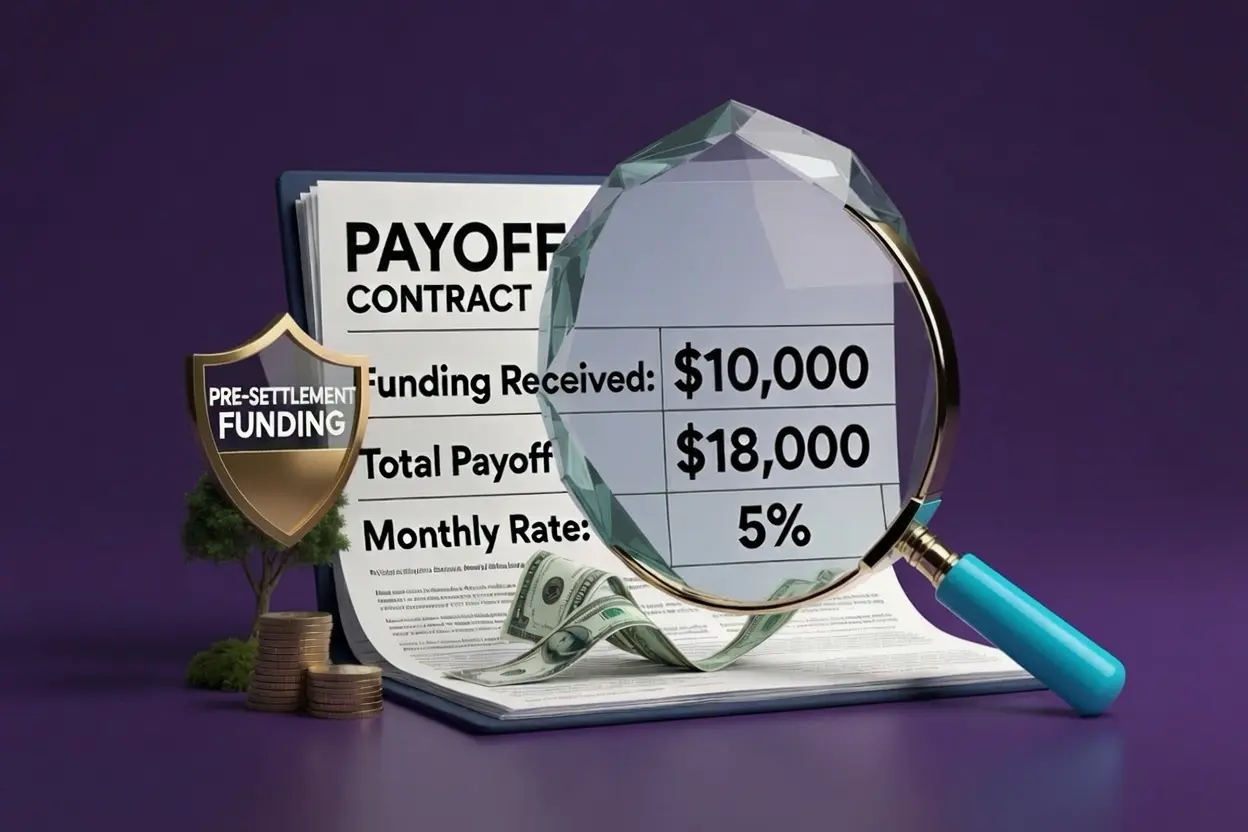
If you are injured, out of work, and falling behind on rent, bills, or medical expenses, pre-settlement funding can sound like the relief you need. For many plaintiffs, the pressure is real. The case is still pending, but the bills are due now.
That is why one question matters so much:
Is pre-settlement funding worth it?
The answer depends on your situation. Pre-settlement funding can be worth it if you have urgent expenses, limited alternatives, and a strong case. But the terms matter. The amount you take matters. And the company you choose matters too.
The right funding can help you stay afloat without forcing you into a low settlement. The wrong funding can cost far more than you expected. That is why it is smart to slow down and ask the right questions before you sign anything.
What is Pre-Settlement Funding?
Pre-settlement funding is a non-recourse cash advance for plaintiffs with pending legal claims. It is often called a lawsuit loan, but it does not work like a traditional loan.
Here is how they are related. Both give you money now. But unlike a regular loan, pre-settlement funding usually does not require monthly payments, credit checks, or income verification. Repayment comes from your settlement proceeds if your case results in a recovery.
Non-recourse means you only pay it back if you win or settle your case. If there is no recovery, you do not repay the advance.
That structure is what makes pre-settlement funding different from a bank loan or credit card. It is tied to the outcome of your case, not your credit score or job history.
How Pre-Settlement Funding Works
The process is usually simple.
First, you apply with a legal funding company. Then the company reviews your case with help from your attorney. If your case qualifies, the company makes an offer based on the estimated value of the claim and the risk involved.
If you accept the offer, you sign the agreement, your attorney signs the required paperwork, and the funds are sent to you.
You can use the money for whatever you need most, including:
- Rent or mortgage
- Utilities
- Groceries
- Car payments
- Medical bills
- Childcare
- Everyday living expenses
Just as important, the funding company does not control your lawsuit, your attorney, or your settlement decisions. The advance is meant to help relieve pressure while your case moves forward.
When Pre-Settlement Funding May Be Worth It
Pre-settlement funding may make sense when you are under real financial strain and waiting for your case to resolve is putting you in a corner.
It may be worth considering if:
- You are behind on rent, mortgage, or utilities
- You cannot work because of your injuries
- Medical bills are piling up
- You are being pressured to settle early because you need cash now
- You do not have a better short-term option
- Your case appears strong enough to support funding
In that kind of situation, funding may help you cover essentials and buy time. That time can matter. Financial pressure often pushes injured plaintiffs toward quick settlements that do not fully reflect the value of the case.
When Pre-Settlement Funding May Not Be Worth It
Pre-settlement funding is not always the right move.
It may not be worth it if:
- You do not truly need the money for necessary expenses
- You have lower-cost options available
- Your case value is limited
- The repayment terms are too aggressive
- The company will not clearly explain pricing
- You are borrowing more than you actually need
This is where people can get into trouble. An advance may feel helpful at first, but if the amount is too large and not capped at 10% of your settlement, or the pricing is unclear, the payoff can eat into your net recovery more than expected.
That is why the goal should not be to borrow the most. The goal is to borrow the least amount that solves the immediate problem.
7 Questions to Ask Before You Get Pre-Settlement Funding
Before you move forward, ask yourself these questions.
1. Do I Really Need Financial Help Right Now?
Are you dealing with expenses that cannot wait until your case settles? That could mean rent, mortgage payments, overdue utilities, groceries, transportation, or medical costs. If the pressure is real and immediate, that is where funding may help.
Write down your most urgent expenses. Be honest with yourself about what is essential and what is not. This helps you figure out whether funding makes sense and how much you may actually need.
If the advance is for basic survival while your case is pending, that is very different from taking money for non-essential spending.
2. What Other Financial Options Do I Have?
Before you take pre-settlement funding, look at your alternatives.
Could a family member help for a short period? Do you have savings you can use without putting yourself in a worse position? Can you arrange a payment plan with a provider, landlord, or creditor? Is there a lower-cost option available to bridge the gap?
This is important because pre-settlement funding is a specialized financial product. It can be a helpful option when other doors are closed, but it should still be compared against whatever realistic alternatives you have.
If no better option exists and the pressure is serious, that can make funding a more reasonable choice.
3. Does My Attorney Participate in the Process?
Pre-settlement funding depends on attorney participation.
A funding company usually needs information about your case from your lawyer, and your attorney typically must review and sign the required documents. Without attorney cooperation, funding generally cannot move forward.
This is not just paperwork. It is also a practical checkpoint. Your attorney can help you understand the stage of your case, the possible value of the claim, and whether taking an advance makes financial sense based on the likely timeline.
That makes the relationship between your lawyer and the funding process essential. If you are considering funding, talk with your attorney early.
4. How Much Money Do I Actually Need?
This is one of the most important questions in the whole process.
It can be tempting to take more than you need, especially when life feels unstable. But more funding means a larger repayment from the settlement if your case is successful.
A responsible approach is to focus on the smallest amount that solves the urgent problem in front of you.
Look at what you need right now. Cover the essentials first. Think in terms of survival and stability, not cushion and extras. A smaller advance can make a big difference while reducing the impact on your eventual recovery.
In many situations, borrowing less is not just cheaper. It is the better financial move.
A responsible funding company should not advance so much that the plaintiff is left with too little when the case settles.
5. How Is the Pricing Structured?
Not all pre-settlement funding agreements are priced the same way.
This is where plaintiffs need to pay close attention. You should ask the company to explain exactly how charges are calculated and what repayment may look like over time.
Ask questions like:
- Is the pricing simple or compounding?
- Are there tiers or scheduled increases?
- Is there a cap on how long charges can accrue?
- What would the estimated payoff be at 6, 12, 18, and 24 months?
- Are there additional fees?
Remember, two offers that look similar upfront can lead to very different repayment amounts later.
Clear pricing is a trust issue too. A reputable company should be able to explain the numbers in plain language and show you how the balance may grow if the case takes longer than expected.
6. How Will Repayment Affect My Net Settlement?
Even though there are no monthly payments, repayment still is a big thing. It comes directly out of your settlement proceeds if your case is successful.
That means you need to think beyond the amount you receive now and ask what you may have left later.
For example, an advance may be worthwhile if it helps you avoid settling too early in a strong case. But if the projected payoff would take too much from your recovery, the tradeoff may not be worth it.
This is where your attorney can be especially helpful. A realistic conversation about case value, timing, liens, fees, and likely net proceeds can give you a clearer picture of whether the advance makes sense.
7. Is the Funding Company Reputable and Transparent?
Don’t ever feel rushed to sign a funding contract.
A legal funding company should be transparent, responsive, and willing to explain the terms without dodging questions. If a company is vague, high-pressure, speaks poorly of another company, won’t provide a payoff, or unwilling to break down the costs, that is a red flag.
Before signing, take time to:
- Read reviews carefully
- Ask for a clear explanation of pricing
- Read the funding agreement line by line
- Ask about caps, fees, and projected payoff amounts
- Make sure the company answers your questions directly
You are not just comparing money. You are comparing how the company treats people during a stressful and critical time in your life.
A transparent company will respect the fact that you are making an important financial decision tied to your case and your future recovery.
Can Pre-Settlement Funding Help You Hold Out for a Fair Settlement?
Many times, yes.
One of the biggest risks injured plaintiffs face is financial pressure. Bills do not stop just because a lawsuit is pending. When that pressure gets too high, it can push someone toward a faster, lower settlement from the insurance company just to make the bleeding stop.
Settlement funding can reduce that financial pressure while your case is still pending.
It may give you breathing room to keep your case moving instead of accepting less because you are desperate for cash.
But this only works when the funding is used carefully. If the amount is too high or the pricing is poor, the cost can undercut the benefit.
That is why the question is not simply, “Can funding help?” The better question is, “Will this particular funding offer help more than it hurts?”
How Long Will Your Case Take?
The timeline matters because time affects cost.
The longer a case takes, the more important it becomes to understand how the pre-settlement funding agreement works over time. Some companies charge far more than plaintiffs realize, especially when they advance too much of the case value or use terms that let costs keep growing without meaningful limits.
That is why the amount advanced and the cap structure matter. When the advance is kept to a reasonable portion of the potential recovery, and the agreement includes protections such as a 3-year cap or maximum repayment limit, plaintiffs are in a much better position to protect more of their settlement.
That does not mean pre-settlement funding is a bad idea. It means plaintiffs should look closely at how much they are taking, how the charges accrue, and whether the terms still leave them with a strong share of the recovery.
If your case may take time, borrowing only what is necessary can help reduce the long-term impact on your settlement.
A Smart Rule Before You Sign
Here is a simple rule that can protect you:
Borrow only what you need, and make sure you understand what repayment may look like over time.
That one habit can save you from a lot of regret later.
The best pre-settlement funding is not the largest offer. It is the offer that helps you handle urgent expenses without taking more of your recovery than necessary.
Is Pre-Settlement Funding Worth It?
Pre-settlement funding can be worth it when you are dealing with real financial hardship, have limited alternatives, and need time to avoid settling too soon.
It may not be worth it if the costs are unclear, the amount is too high, or the advance is not truly necessary.
The bottom line is simple: pre-settlement funding is a tool. Used the right way, it can give you breathing room during a difficult time. Used carelessly, it can cost more than it should.
That is why it pays to ask questions, compare terms, involve your attorney, and borrow carefully.
Need Help Understanding Your Options?
At Baker Street Funding, we keep the process clear, respectful, and straightforward.
We provide non-recourse pre-settlement funding, which means you only pay it back if you win or settle your case. There are no monthly payments, no upfront costs, and no credit score requirements. We also offer low non-compounding rates and a 3-year cap, so your costs do not keep growing forever if your case takes longer than expected.
We also keep advances tailored to the case so plaintiffs can seek needed funds without giving up too much of their potential recovery.
If you want to see whether pre-settlement funding makes sense for your situation, we are here to help you review your options.
Apply online or call Baker Street Funding at (888) 711-3599 to discuss your case.