Absolutely. You can use pre-settlement funding for car payments.
That is one of the most common reasons injured plaintiffs look into legal funding in the first place. Your case may still be pending, but your car payment is still due. If your injuries kept you out of work, that gap can hit hard and fast.
Pre-settlement funding is not a traditional loan. It is non-recourse, which means you only pay it back if you win or settle your case. Repayment comes directly out of your settlement proceeds. If you lose, you owe nothing.
Why this question comes up so often after an injury
After an accident, your income can drop before your bills do. The car payment, insurance, gas, and everyday costs keep moving whether your case settles next month or next year.
For many people, a car is not optional. It is how you get to medical appointments, physical therapy, follow-up visits, the grocery store, or your child’s school. Even if your vehicle was not the one involved in the accident, losing your car because you fell behind on payments can make a difficult situation even worse. A missed auto loan payment can result in late fees, credit damage, or repossession. Once that happens, the financial fallout spreads fast.
That is why plaintiffs often ask about pre-settlement funding for car payments. You are usually not looking for extra spending money. You are trying to keep your life from sliding backward while your attorney handles the case.
Yes, pre-settlement funding can be used for car payments
In many personal injury cases, plaintiffs use pre-settlement legal funding for necessary bills. That can include car payments, rent, groceries, utilities, insurance, transportation, and other basic living expenses.
People often call this a lawsuit loan, but it is not a bank loan. Approval mainly depends more on the strength and value of your case than on your credit score. You also do not make monthly payments while the case is pending.
That structure matters. A traditional loan still has to be repaid no matter what happens in your lawsuit. Non-recourse legal funding works differently. You only pay it back if there is a recovery.
When using lawsuit funding for a car payment makes sense
Using legal funding for a car payment may make sense if:
- your injury reduced your income
- you are behind because you cannot work
- you need your car for treatment, daily life, or family responsibilities
- the insurance company is dragging things out
- taking a low settlement from the insurance company now would put you in a worse spot later
- you only need short-term help for essential bills
The key is this: the funding should solve a real pressure point. If the car payment is the bill pushing you toward panic, that is exactly the kind of problem pre-settlement funding is often used to address.
What to try before taking pre-settlement funding
Pre-settlement funding can help with car payments, but it should not always be your first move.
Start with the lowest-cost options first. If the lawsuit came from a car accident, check whether any available insurance coverage may help with part of the problem. That may include property damage coverage, rental reimbursement, gap coverage, or other transportation-related benefits, depending on the facts of the claim and the policies involved.
You should also contact your lender or servicer right away and ask whether they offer a hardship plan, payment extension, due-date change, or temporary pause. If they agree to anything, get it in writing.
Then look at any other realistic short-term options, such as disability benefits, family support, or other available resources.If those options are denied or not enough, lawsuit funding may be the tool that helps you stay current without getting boxed into an early, low settlement.
You might like this: How To Pay Bills While Waiting For A Car Accident Settlement
What if you are already behind on your car payment?
Do not ignore the notices.
If you are already behind, the smart move is to act quickly. Call the lender and find out exactly what is needed to bring the account current. Ask whether they will give you a short extension or revised payment arrangement, and again, ask for any agreement in writing.
Then talk to your attorney about your case timeline. If repossession risk is getting real and your case qualifies, pre-settlement funding may help you bridge the gap and protect your transportation while the case is still pending.
How pre-settlement funding works
The process is usually straightforward.
First, you apply and provide the basic details about your personal injury lawsuit. Next, the funding company works with your attorney to review the case. If the case qualifies, you may receive an advance against a portion of your expected settlement.
If your case ends in a settlement or award, repayment comes directly out of the settlement proceeds. If you lose, there is no repayment obligation. That is the core protection behind non-recourse legal funding.
How much funding should you take?
Only take what you need.
That point matters more than people think. The goal is to relieve pressure, not to overfund the case. If the urgent issue is one or two car payments, insurance, gas, or related transportation costs, focus on that amount.
A smaller advance may help protect more of your settlement later. If the case lasts longer than expected, some plaintiffs look at additional funding later. Even then, it is usually smarter to stay conservative.
Remember, legal funding is meant to solve a short-term problem, not create a larger one later.
What to ask before signing a funding agreement
Before you sign, ask clear questions:
- Is the funding non-recourse?
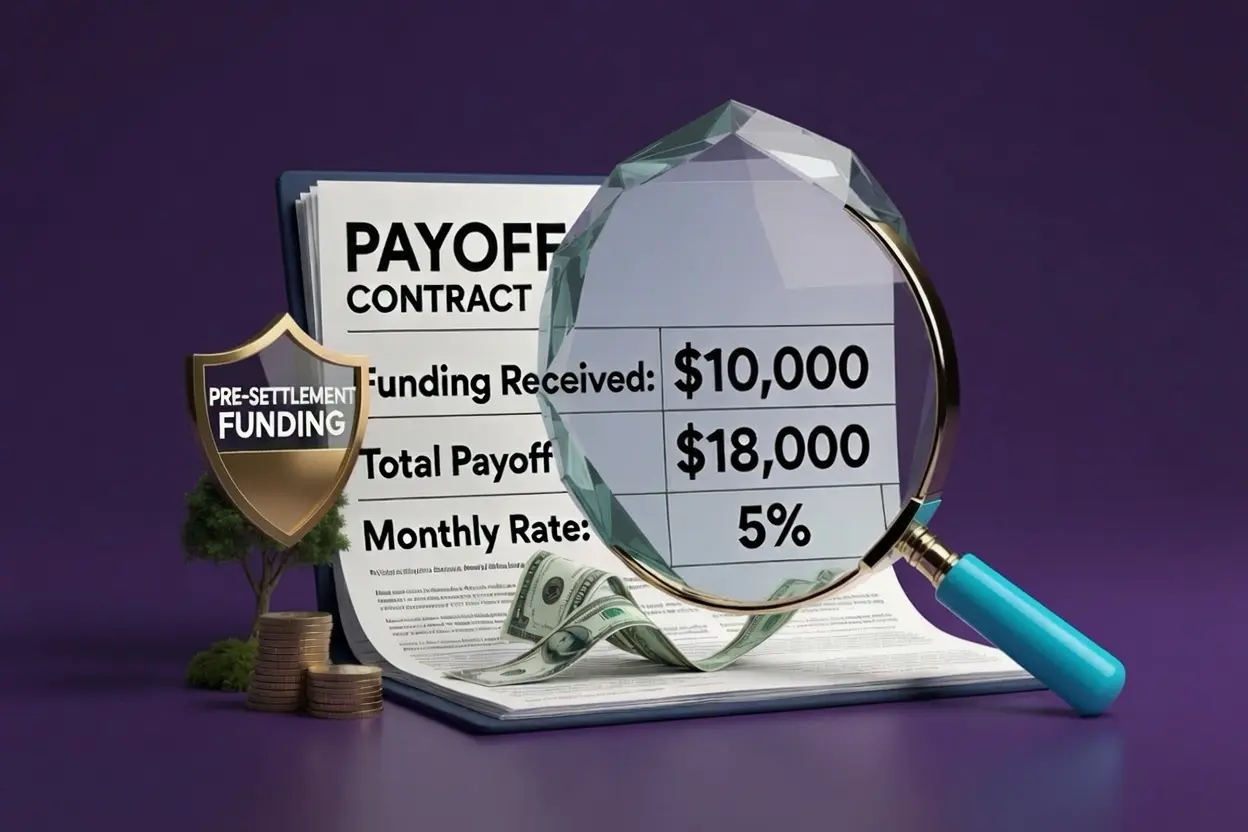
- What is the estimated payoff at 6, 12, and 18 months?
- Are the charges fixed, simple, or compounding?
- Are there any fees I should know about?
- Will my attorney review or acknowledge the agreement?
- What happens if my case settles for less than expected?
- Can I see the payoff terms in writing before I sign?
These questions help you compare offers and avoid surprises. They also help you stay focused on the real purpose of the funding, which is short-term stability.
Is this only for car accident cases?
No.
This question comes up most often in car accident claims because the transportation issue is obvious. But plaintiffs in other personal injury cases ask it too when lost income puts basic bills at risk.
Still, car accident legal funding is one of the most common situations. If your lawsuit came from a crash and your payment is coming due, using pre-settlement funding for car payments is a common real-world use of the funds.
What funding companies usually look at
If you apply for pre-settlement funding, the decision is usually based on your case, not your credit score. Funding companies generally want to see that:
- You have an attorney working on a contingency fee basis who agrees to cooperate with the funding process.
- Your personal injury case is active and has an estimated value of at least $50,000.
- The details of your case, including liability and damages, show a strong chance of winning your settlement.
As noted earlier, traditional lenders often focus on your job history, credit profile, or income. Legal funding companies look primarily at the strength of the case because repayment comes from the settlement, not from your paycheck.
Your credit score is also not a factor, and there are no monthly payments.
The takeaway
Yes, you can often use pre-settlement funding for car payments.
That is one of the main reasons this kind of funding exists. It can help you stay on top of an essential bill while your lawsuit moves forward. The important thing is to use it carefully, try lower-cost options first, and only take what you actually need.
Because it is non-recourse, repayment comes directly out of your settlement proceeds. There are no monthly payments while your case is pending. And if you lose your case, you owe nothing.
Get help covering essential bills while your case is pending
If you need help making car payments after an accident, Baker Street Funding may be able to help. We provide non-recourse pre-settlement funding for plaintiffs in personal injury lawsuits, with no monthly payments and no repayment if you lose your case. You can use the funds for necessary expenses like car payments, rent, groceries, utilities, and other bills.
Apply today or call Baker Street Funding to see if your case qualifies for lawsuit funding that helps you stay financially stable while your attorney fights for your recovery.
FAQs
Can I use a lawsuit loan for my car payment?
Yes, in many cases you can. Pre-settlement funding is commonly used for everyday expenses, including car payments, rent, utilities, groceries, and other necessary bills while your lawsuit is pending.
Do I need good credit to get pre-settlement funding for car payments?
No. Baker Street Funding focuses on the strength of your case rather than your credit score, income, or employment history.
Do I make monthly payments on pre-settlement funding?
No. There are no monthly payments while your case is pending. Repayment comes directly from your settlement if you win or settle.
Is pre-settlement legal funding only for car accident cases?
No. It is often used in car accident lawsuits, but it may also be available in other personal injury cases, depending on the facts of the claim and the attorney’s involvement.
Will I owe anything if I lose my case?
With our non-recourse funding, you do not repay anything if you lose. That means we take the risk of the case not recovering.