A car accident can flip your finances upside down fast. You may be dealing with medical treatment, missed work, car repairs, and calls from insurance adjusters, all while rent, utilities, groceries, and other household bills keep coming.
That is why so many injured people ask the same question: How do I pay my bills while waiting for a car accident settlement? The answer depends on your situation, but you usually have a few paths to look at before making a rushed financial decision.
This guide breaks down practical options that may help you cover essential living expenses while your personal injury case is still pending. It also explains when pre-settlement funding may make sense, what it is, and what to watch for before you sign anything
Why paying bills gets so hard after a car accident
The biggest problem is usually timing.
Your expenses are due now, but a car accident claim can take months or years to resolve. If your injuries keep you out of work, even basic bills can start to pile up fast. That may include:
- Rent or mortgage
- Utilities
- Groceries
- Car payments
- Insurance premiums
- Childcare
- Transportation to medical appointments
- Minimum credit card payments
And that pressure can create a second problem. When money gets tight, an injured person may feel pushed to accept a low settlement just to keep the lights on.
What to do first before borrowing money
Before you take on any financing, start with the lowest-cost options available to you.
Review available insurance coverage
Depending on the facts of the crash and your policy, some insurance benefits may help with part of the short-term financial strain. In some cases, certain coverages may help with medical expenses or other immediate costs while the larger claim is still being worked out.
This usually does not solve everything, but it can reduce pressure.
Ask for hardship arrangements
Many landlords, utility providers, hospitals, and other creditors offer payment plans or temporary hardship options. The key is to ask early, before the account becomes seriously past due.
A short extension or payment arrangement may buy you valuable time.
Cut back to the essentials
Focus first on the bills that protect your stability: housing, food, utilities, transportation, insurance, and necessary medical care.
That gives you a clearer picture of what you truly need and helps you avoid taking more money than necessary.
Can you get money before your car accident case settles?
In some cases, yes.
One option is pre-settlement funding, also called pre-settlement legal funding, a lawsuit loan, or a settlement advance.
Pre-settlement funding is not based on your credit score or job history. It is based on the strength of your case. In personal injury matters (and other other civil lawsuits), it is non-recourse, which means repayment comes only from the settlement or award.
That means:
- No monthly payments
- No out-of-pocket repayment during the case
- No repayment if there is no recovery
That is what makes it different from a traditional bank loan.
When pre-settlement funding may help
Pre-settlement funding is usually worth considering when:
- You have an active car accident or personal injury claim
- You are represented by an attorney
- Liability and injuries are documented
- Insurance coverage is available
- You need financial help covering basic living expenses
- Financial stress could pressure you to settle too early
This matters because multi-billion dollar insurance companies know when an injured person is under stress. When rent is due and income dropped, a low offer can start to feel tempting.
That is exactly where funding can help. It may give you room to keep up with the basics while your attorney keeps pushing the case forward.
Learn more about how to qualify for a lawsuit loan
What bills can pre-settlement funding usually cover?
If approved, the funds are generally used for normal household needs like:
- Rent or mortgage
- Utility bills
- Groceries
- Car payments
- Gas and transportation
- Childcare
- Phone bills
- Insurance
- Other essential living expenses
The smart move is to use funding for necessities, not extras. The less you take, the more of your settlement you may keep later.
Will pre-settlement funding hurt your credit?
No.
That is because pre-settlement funding approval is based on your car accident case strength, not on a traditional credit underwriting model. Since there are no monthly payments, there is no normal payment schedule to report like a credit card or bank loan.
Still, you should always review the legal funding agreement carefully and ask how the company structures the advance.
What happens if you lose your case?
This is one of the most important questions to ask.
With non-recourse legal funding, repayment comes from the case recovery. If there is no recovery, the plaintiff does not repay the advance out of pocket.
That is a major difference between pre-settlement funding and standard consumer debt.
How much funding should you take?
Only take what you need.
That matters more than people think. The point is to relieve financial pressure, not to overfund the case. A smaller advance can often cover the bills that matter most while protecting more of the settlement for you at the end.
If your case takes longer than expected, some companies may allow additional funding later. Even then, it is smart to stay conservative.
Does your accident lawyer need to be involved?
In most cases, yes.
Your attorney usually needs to confirm basic case details and review or acknowledge the funding agreement. That helps protect you, helps protect the attorney-client relationship, and gives the funding company the case information needed to evaluate the request.
A legitimate funding process should work with your attorney, not around your attorney.
What to ask before signing a funding agreement
Not all legal funding companies use the same pricing or contract structure. Before you sign, ask:
- Is the funding non-recourse?
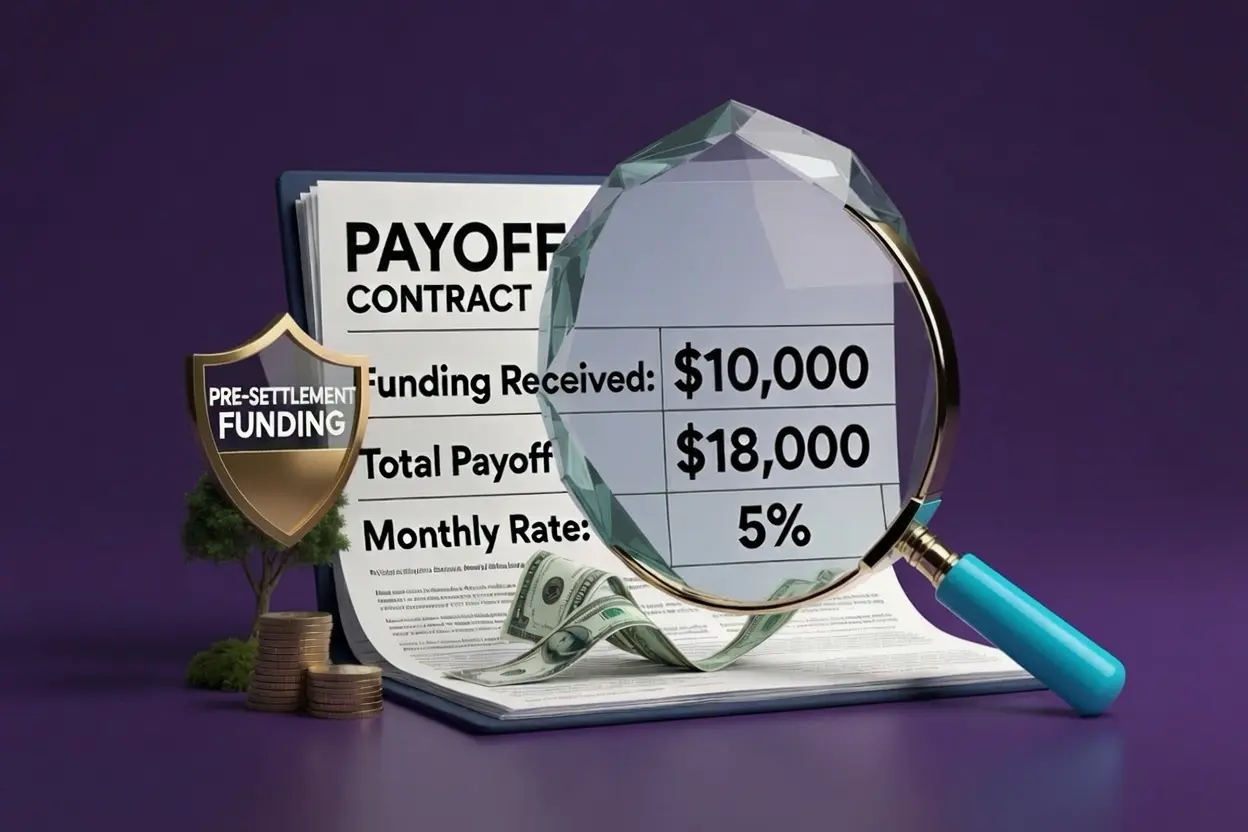
- What is the total payoff at 6, 12, and 18 months?
- Are the charges fixed, simple, or compounding?
- Are there any hidden fees?
- Can I see the payoff schedule in writing?
- Does my attorney review the agreement first?
- Is the amount being offered reasonable compared with the likely case value?
These questions help you compare options and avoid surprises later.
The bottom line
If you are struggling to pay household bills after a car accident, the real problem is usually that your expenses cannot wait for your settlement.
Start with the simplest and lowest-cost options first. Review insurance, ask for hardship arrangements, and protect your essential bills. If that still is not enough, pre-settlement funding may help you cover living expenses without monthly payments and without personal repayment if the case does not recover.
When used carefully, it can give you breathing room and help you avoid making financial decisions out of panic.
Need help covering rent, utilities, groceries, or other basic expenses while your case is pending? Baker Street Funding provides non-recourse pre-settlement funding for qualifying personal injury claims, with repayment coming from the case recovery, not from your pocket.
Frequently Asked Questions
Can I get money before my car accident settlement?
Yes. If you have an active claim and an attorney, you may qualify for pre-settlement funding based on the strength of your case.
Can I use pre-settlement funding for rent and utilities?
Yes. Plaintiffs often use legal funding for basic living expenses such as rent, mortgage payments, groceries, utilities, transportation, and childcare.
Do I need good credit to qualify?
No. Approval is based more on the merits of the case than on your credit score.
What happens if I lose my case?
With our non-recourse funding, you do not repay the advance out of pocket if there is no recovery.
Does my attorney have to approve the funding?
Your attorney needs to be involved in the process, confirm case details, and review or acknowledge the lawsuit funding agreement.
How much pre-settlement funding should I take?
Usually, only what you need for essentials. Taking a smaller advance may help preserve more of your settlement later.